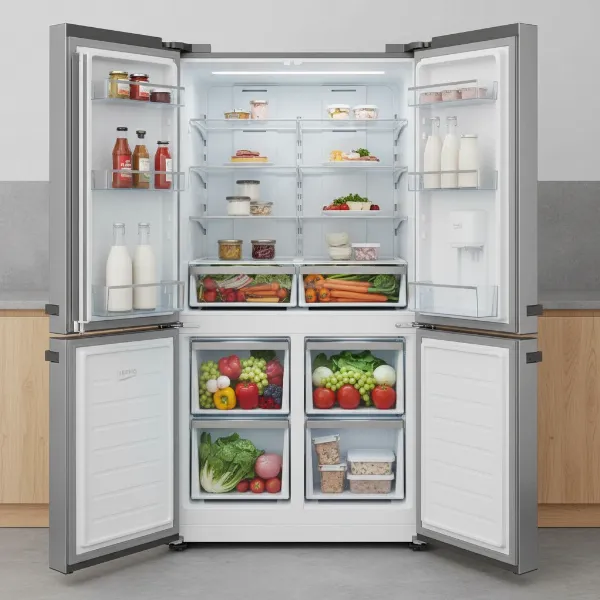
In the world of modern kitchen appliances, few things are as essential as a reliable refrigerator. But beneath the sleek exterior lies a complex cooling system, and understanding its intricacies can significantly impact how long your food stays fresh. For decades, the single evaporator system dominated, but advancements have brought forth dual cooling technologies, promising superior food preservation and efficiency. If you’re pondering whether to upgrade or simply want to demystify the tech behind your appliance, join us as we explore the fundamental differences between single evaporator and dual cooling systems. This comprehensive guide will explain how each works, their respective advantages and disadvantages, and help you determine which technology best suits your household’s needs.
Understanding Refrigerator Cooling Principles
Before diving into the specifics of single and dual cooling, it’s helpful to grasp the basics of how a refrigerator generates cold. At its core, refrigeration is a thermodynamic process that moves heat from inside the appliance to the outside. This is achieved through a sealed system involving a compressor, condenser, expansion valve, and evaporator. The compressor pressurizes a refrigerant gas, turning it into a hot liquid. This liquid then flows through the condenser coils, typically on the back or bottom of the fridge, where it dissipates heat into the room and cools down. Next, it passes through an expansion valve, which lowers its pressure and temperature, transforming it back into a cold liquid/gas mixture. Finally, this cold refrigerant enters the evaporator coil inside the refrigerator compartments, where it absorbs heat from the interior air, cooling it down. The now-warmed refrigerant then returns to the compressor, completing the cycle. The critical difference between cooling systems lies in how many evaporators are used and how air is managed between the fresh food and freezer sections.
Single Evaporator System: The Traditional Approach
The single evaporator system is the most conventional and widely used refrigeration design, primarily found in budget-friendly and older refrigerator models. In this setup, a single evaporator coil is located within the freezer compartment. A fan then circulates cold air from the freezer into the fresh food section through a damper or vent. This shared airflow design makes for a simpler and more cost-effective manufacturing process.
Advantages of Single Evaporator Systems
- Cost-Effectiveness: Refrigerators with single evaporators are generally more affordable to purchase, making them an attractive option for those on a tighter budget.
- Simpler Design: With fewer components and a less complex airflow mechanism, these systems are often easier to manufacture and, in some cases, simpler to repair.
- Energy Efficiency (Debatable): While some might assume fewer components mean better efficiency, it largely depends on the specific model and compressor technology. Modern single evaporator units can still achieve good energy ratings.
|
Our Picks for the Best Refrigerator in 2026
As an Amazon Associate I earn from qualifying purchases.
|
||
| Num | Product | Action |
|---|---|---|
| 1 | NEWBULIG Mini Fridge with Freezer 3.2 Cu.Ft Small Refrigerator for Office, Dorm, Small Fridge with Adjustable Thermostat, Energy Saving, Singel Door, Black |

|
| 2 | Frigidaire, 2 Door Apartment Size Refrigerator with Freezer, 7.5 cu ft, Adjustable Spill-Proof Shelves, Crisper Bins, Platinum Silver, Garage Ready |
|
| 3 | GE Profile 28.7 cu. ft. 4-Door French Door Refrigerator in Stainless Steel with Dual-Dispense Autofill Pitcher PGE29BYTFS |
|
| 4 | ARCTIC CHEF Mini Refrigerator, Compact Freezer Compartment, Adjustable Thermostat Control, Reversible Door, Ideal Fridge for Dorm, Office, Apartment, Platinum Stainless, 3.2 Cubic Feet |
|
| 5 | Electactic Mini Fridge 130 Can Beverage Refrigerator Cooler, 3.2 Cu.Ft Drink Fridge for Soda Wine Beer, Adjustable Temperature Control for Home Office, Black |
|
| 6 | Whirlpool WRS321SDHZ 21 Cu. Ft. Stainless Side-by-Side Refrigerator |
|
| 7 | Frigidaire, 2 Door Apartment Size Refrigerator/Freezer Combo, 7.5 cu ft, Platinum Series, Stainless, 23" D x 21.5" W x 55.5" H |
|
| 8 | GE GTS18HGNRWW 28 Inch Top Freezer Refrigerator with 17.5 Cu. Ft. Capacity, Reversible Hinges, Gallon Door Shelves, Adjustable Glass Shelves, Frost Free |
|
| 9 | Samsung 17.5 cu. ft. Smart Counter Depth 3-Door French Door Refrigerator, Stainless Steel, RF18A5101SR/AA |
|
| 10 | Frigidaire EFR786 Retro Apartment Size Refrigerator with Top Freezer - 2 Door Fridge with 7.5 Cu Ft of Storage Capacity, Adjustable Spill-Proof Shelves, Door & Crisper Bins, Black |
|
Disadvantages of Single Evaporator Systems
- Shared Air, Mixed Odors: Since air circulates between both compartments, odors from strong-smelling foods in the refrigerator can easily transfer to items in the freezer, affecting the taste of ice cubes or frozen goods.
- Imbalanced Humidity Levels: The freezer inherently requires dry air to prevent frost buildup, while the refrigerator needs higher humidity to keep fresh produce from wilting. In a single evaporator system, the shared, dry air from the freezer can dehydrate fresh fruits and vegetables in the fridge, leading to premature spoilage and freezer burn in the freezer itself due to moisture extraction.
- Less Precise Temperature Control: With a single thermostat typically monitoring the refrigerator section, the freezer’s temperature is often a secondary consideration, making precise temperature management for both compartments challenging. Fluctuations can occur, impacting food quality.
- Potential for Defrost Issues: In some older or poorly designed single evaporator units, the shared airflow can sometimes lead to the refrigerator evaporator coil freezing up, disrupting cooling.
Dual Cooling (Dual Evaporator) System: A Step Up in Preservation
Dual cooling, often referred to as dual evaporator or twin cooling, represents a significant upgrade in refrigeration technology. This system employs two independent evaporator coils: one dedicated to the fresh food compartment and another for the freezer. This separation of cooling circuits allows for optimal and independent climate control in each section.
How Dual Cooling Works
In a typical dual cooling system (which often still uses a single compressor), the compressor sends refrigerant to both evaporators, controlled by a diverter valve. Each evaporator then cools its respective compartment independently. The fresh food section maintains a higher, more stable humidity, while the freezer maintains a drier, consistently cold environment. This eliminates the mixing of air and moisture between the two zones. Some high-end models take this a step further with dual compressors, where each compartment has its own completely separate refrigeration system, offering the ultimate in independent control and redundancy.
Advantages of Dual Cooling Systems
- Independent Temperature Control: With separate evaporators, precise temperature settings can be maintained in both the refrigerator and freezer compartments, leading to optimal preservation conditions for various food types.
- Optimized Humidity Levels: The refrigerator can maintain higher humidity levels (around 70-80%) to keep fruits and vegetables fresh and crisp longer, while the freezer remains dry (around 30-40% humidity) to prevent frost buildup and freezer burn on frozen foods.
- Elimination of Odor Transfer: The complete separation of airflow means food odors from one compartment cannot migrate to the other, ensuring that your ice cubes taste like water and your frozen meals retain their intended flavor.
- Enhanced Food Preservation: By providing ideal conditions in each zone, dual cooling significantly extends the shelf life of both fresh and frozen groceries, reducing food waste and saving money. “Maintaining distinct humidity levels in the refrigerator and freezer is paramount for preserving food quality and extending its shelf life,” says appliance expert Maria Rodriguez.
- Improved Energy Efficiency (Potentially): While the system is more complex, the ability to cool each compartment independently and more precisely can lead to overall energy savings, especially in systems where only one evaporator needs to cycle at a given time.
Disadvantages of Dual Cooling Systems
- Higher Initial Cost: Dual cooling refrigerators are typically more expensive than their single evaporator counterparts due to the added components and technological sophistication.
- Increased Complexity: More parts mean a slightly higher potential for component failure, though reputable brands design these systems for reliability. Servicing might also be more intricate.
- Maintenance Considerations: While not inherently more difficult, understanding the nuances of a dual system for troubleshooting can require a bit more technical knowledge.
Single Compressor vs. Dual Compressor: Refining Dual Cooling
Within the realm of dual cooling, an important distinction exists between models that use a single compressor with dual evaporators and those that feature dual compressors with dual evaporators.
- Single Compressor, Dual Evaporators: This is the more common “dual cooling” setup in many modern consumer refrigerators, such as Samsung’s Twin Cooling Plus. It offers the core benefits of independent evaporators (separate humidity, no odor transfer) while keeping manufacturing costs relatively lower by using one compressor to manage both circuits via a diverter valve. This provides an excellent balance of performance and price.
- Dual Compressor, Dual Evaporators: Found in high-end, often built-in, or professional-grade refrigerators (like Sub-Zero), this system features two completely independent refrigeration units—each with its own compressor and evaporator—for the fridge and freezer. This offers the ultimate in temperature stability, humidity control, and performance. A significant advantage is redundancy; if one compressor fails, the other compartment may continue to function. However, this comes at a premium price.
Key Differences and Benefits at a Glance
For a clearer understanding, here’s a comparative look at the core aspects:
| Feature | Single Evaporator | Dual Evaporator (Single Compressor) | Dual Compressor (Dual Evaporator) |
|---|---|---|---|
| Evaporators | 1 (in freezer) | 2 (one per compartment) | 2 (one per compartment) |
| Compressors | 1 | 1 | 2 (one per compartment) |
| Air Circulation | Shared between compartments | Independent | Completely Independent |
| Temperature Control | Less precise, one thermostat | More precise, independent settings | Most precise, absolute independence |
| Humidity Control | Poor (dry fridge, frosty freezer) | Excellent (high fridge, low freezer) | Optimal (dedicated, fine-tuned) |
| Odor Transfer | High risk | Minimal/None | None |
| Food Preservation | Shorter shelf life, more freezer burn | Longer freshness, reduced freezer burn | Longest preservation, optimal conditions |
| Initial Cost | Lower | Medium-High | Highest |
| System Complexity | Simpler | Moderate | High |
| Redundancy | None | None | Yes (if one compressor fails) |
Choosing the Right System for Your Home
Selecting between single evaporator and dual cooling technologies depends on several factors specific to your lifestyle and budget.
- Budget Considerations: If cost is a primary concern, a single evaporator refrigerator offers a functional and affordable solution. However, consider the potential long-term savings on food waste with a dual cooling system.
- Food Storage Habits: Do you buy fresh produce in bulk? Do you store strong-smelling foods? A dual cooling system will significantly benefit those who prioritize longer freshness for fruits, vegetables, and delicate items, and want to avoid flavor transfer. If you mostly rely on pre-packaged goods and consume fresh items quickly, a single evaporator might suffice.
- Importance of Precision: For meticulous cooks or those with specialized food storage needs (e.g., wine, specific cheeses), the precise temperature and humidity control of a dual cooling system can be a game-changer.
- Brand and Model Specifics: Not all dual cooling systems are created equal. Research specific brands and models known for their reliable implementation of these technologies. Brands like Samsung and LG often feature single-compressor dual evaporator systems, while Sub-Zero and Miele offer dual compressor units.
- Longevity and Repairability: While more complex, modern dual cooling systems from reputable manufacturers are designed for durability. Consult reviews and speak with appliance technicians about common issues and repair costs for specific models.
Tips for Maximizing Refrigerator Performance
Regardless of your chosen cooling system, proper usage and maintenance are key to extending your refrigerator’s lifespan and ensuring optimal food preservation.
- Organize Smartly: Keep similar items together, use clear containers, and avoid overcrowding to allow for proper air circulation.
- Clean Regularly: Wipe down spills immediately and deep clean your refrigerator every few months to prevent odor buildup and maintain hygiene. For single evaporator units, this is even more crucial to combat odor transfer.
- Set Optimal Temperatures: Aim for 37°F (3°C) for the fresh food section and 0°F (-18°C) for the freezer. Check your appliance manual for specific recommendations. Precise temperature management is easier with dual cooling systems.
- Check Door Seals: Ensure the door seals are airtight to prevent warm air from entering, which forces the compressor to work harder and can lead to frost buildup, especially in single evaporator freezers.
- Address Issues Promptly: Don’t ignore unusual noises, excessive frost, or inconsistent cooling. Early intervention can prevent minor problems from becoming major repairs.
Conclusion
The debate between single evaporator and dual cooling refrigerators highlights the ongoing evolution of home appliance technology, driven by a desire for better food preservation and user experience. While single evaporator systems remain a viable and economical choice, dual cooling, particularly those with dual evaporators, offers a distinct advantage in maintaining optimal conditions for both fresh and frozen foods. By providing independent climate control and eliminating odor transfer, dual cooling empowers you to keep your groceries fresher for longer, ultimately reducing waste and enhancing your culinary endeavors. As you consider your next refrigerator, weigh your budget against your specific food storage needs and the value you place on advanced preservation. Which cooling system will be the perfect fit to keep your kitchen running smoothly and your food delicious?
Frequently Asked Questions
How does a single evaporator refrigerator contribute to freezer burn?
In a single evaporator system, the dry air needed for the freezer is circulated into the refrigerator, and vice-versa. This shared, dry air can draw moisture out of uncovered frozen foods, leading to dehydration and the formation of ice crystals characteristic of freezer burn.
Can dual cooling refrigerators save energy?
Yes, many dual cooling refrigerators can be more energy-efficient. Because each compartment has its own evaporator and the system can cool them independently, the compressor may not need to run as frequently or as hard for the entire unit, leading to optimized energy consumption compared to continuously running a single system for two distinct zones.
Do all French door refrigerators have dual cooling?
No, having a French door design does not automatically mean a refrigerator uses dual cooling technology. While many modern French door models do incorporate dual evaporators to enhance food preservation, it’s essential to check the specific features and specifications of each model to confirm its cooling system.
Is odor transfer a significant problem in single evaporator refrigerators?
Odor transfer can indeed be a significant problem in single evaporator refrigerators, especially if strong-smelling foods like onions or fish are stored uncovered. The shared airflow between the refrigerator and freezer compartments allows food aromas to circulate and permeate other items, including ice cubes and frozen goods.
What’s the main benefit of a dual compressor system over a single compressor with dual evaporators?
The primary advantage of a dual compressor system lies in its complete independence and redundancy. Each compartment has its own dedicated compressor and cooling circuit, offering the most precise temperature and humidity control. Furthermore, if one compressor fails, the other compartment can often continue to function, providing a valuable backup.