For wine enthusiasts and casual collectors alike, the journey into the world of reds and whites is a rich and rewarding one. Yet, enjoying each varietal at its peak requires more than just uncorking a bottle; it demands meticulous storage. The challenge? Red and white wines, along with sparkling varieties, thrive at different temperatures. Storing them in a standard kitchen refrigerator or at room temperature can significantly diminish their quality and shorten their lifespan. This is where a specialized appliance, the dual zone wine refrigerator, becomes an indispensable tool, offering a sophisticated solution for preserving and serving your diverse collection. This comprehensive guide will explore why dual zone technology is essential, what features to prioritize, compare options, and provide valuable tips for maximizing your wine storage experience.
Understanding Dual Zone Wine Refrigerators
Why Dual Zone is Essential for Mixed Collections
Table is empty.The fundamental principle behind preserving wine lies in temperature consistency. However, the ideal temperature varies significantly between different wine types. Red wines, for instance, generally prefer a warmer storage environment, typically between 55-65°F (13-18°C), which allows their complex flavors and aromas to develop gracefully. White wines, rosés, and sparkling varieties, on the other hand, demand a cooler climate, usually ranging from 40-55°F (5-13°C), to maintain their crispness and vibrancy. A standard single-zone wine refrigerator can only provide one uniform temperature, forcing a compromise that might not be optimal for either category.
This is precisely why dual zone wine refrigerators are a game-changer for anyone with a mixed collection. These innovative appliances feature two independently controlled compartments, each capable of maintaining its own precise temperature setting. This means you can keep your robust Cabernet Sauvignons at their ideal cellar temperature in one zone, while simultaneously chilling your delicate Pinot Grigios or celebratory Champagnes to their perfect serving temperature in the other. This flexibility ensures every bottle is stored optimally, ready to be enjoyed at a moment’s notice, safeguarding their integrity and enhancing your drinking experience.
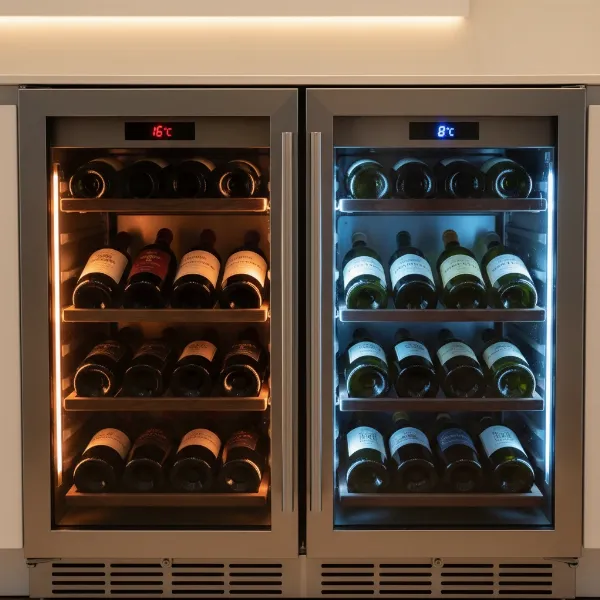 Interior view of a modern dual zone wine refrigerator showing two distinct temperature zones with bottles stored
Key Features to Look for in a Dual Zone Wine Refrigerator
Choosing the perfect dual zone wine refrigerator involves considering several critical features that contribute to optimal wine preservation and user convenience.
Temperature Control: Look for models with precise digital temperature controls for each zone, allowing you to set and monitor conditions with accuracy. Stability is key; the refrigerator should maintain consistent temperatures without significant fluctuations.
Capacity and Shelving: Evaluate the bottle capacity based on your current collection and future growth. High-quality shelving is paramount. Opt for smooth-gliding, adjustable wooden shelves, as they minimize vibrations and prevent label damage better than wire racks. Ensure there’s adequate space for different bottle shapes, including wider Pinot Noir or Champagne bottles.
UV Protection: Light exposure, especially ultraviolet (UV) rays, can prematurely age wine and degrade its flavors, leading to “light strike.” Wine refrigerators should feature UV-resistant, tempered glass doors to shield your collection while still allowing for elegant display.
Vibration Dampening: Vibrations, often caused by compressor cycles, can disturb wine sediment and negatively impact the aging process. Look for refrigerators with advanced vibration dampening systems, often featuring quiet compressors and sturdy shelving, to keep your wines undisturbed.
Humidity Control: Maintaining optimal humidity levels (typically 50-70%) is vital to prevent corks from drying out and shrinking. A dry cork can allow air to seep into the bottle, causing oxidation and spoilage. Many premium models offer integrated humidity control systems.
Energy Efficiency: An Energy Star certified wine refrigerator will help reduce electricity consumption, lowering operating costs and your environmental footprint.
Noise Level: As wine refrigerators often reside in living or entertaining spaces, a quiet operation is highly desirable. Check decibel ratings and reviews for models known for silent performance.
Design and Installation: Consider whether you prefer a freestanding unit, a built-in model that integrates seamlessly into cabinetry, or an under-counter option. Aesthetic elements like stainless steel finishes, soft LED interior lighting, reversible doors, and door alarms can also enhance functionality and complement your home décor.
Top Picks: Best Dual Zone Wine Refrigerators for 2024
Investing in a dual zone wine refrigerator is a commitment to preserving the quality and enhancing the enjoyment of your wine collection. While specific model recommendations can quickly evolve, understanding the categories and their associated features is crucial for making an informed decision. Here’s a conceptual comparison of dual zone wine refrigerators across various types:
| Feature Category | High-Capacity Built-In | Mid-Size Freestanding | Compact Under-Counter |
|---|---|---|---|
| Typical Capacity | 100+ Bottles | 30-70 Bottles | 18-30 Bottles |
| Ideal For | Serious collectors, large homes, custom kitchens | Enthusiasts, entertaining, flexible placement | Small spaces, starter collections, secondary storage |
| Key Technologies | Advanced humidity sensors, Wi-Fi connectivity, robust compressor systems, premium wooden racks, digital touchscreen controls | Digital temperature displays, UV-protected glass, vibration reduction, adjustable shelves | Basic dual zone functionality, quiet operation, sleek design for smaller footprints |
| Considerations | Requires professional installation, higher initial investment, dedicated space planning | Offers placement flexibility, a balance of features and cost, varied aesthetic options | Limited capacity, may lack advanced features, ideal for specific small-scale needs |
Each category offers distinct advantages. High-capacity built-in units, for example, provide a luxurious, integrated look and often come with advanced features for serious collectors. Mid-size freestanding models offer a versatile balance of capacity, features, and placement flexibility. Compact under-counter units are perfect for smaller spaces or as supplementary storage, fitting neatly into kitchen designs without dominating the area.
 A person thoughtfully looking at different wine refrigerators with a checklist or tablet in hand, representing the buying guide decision process
Buying Guide: Choosing Your Perfect Dual Zone Wine Refrigerator
Selecting the right dual zone wine refrigerator is a personal decision that balances your wine collection habits, available space, and budget. Here’s a step-by-step guide to help you navigate the options:
Determine Your Needs
Collection Size & Growth: Honestly assess how many bottles you currently own and how many you anticipate acquiring in the future. It’s often wise to choose a unit with slightly more capacity than you currently need to accommodate growth.
Space & Installation: Measure your intended space meticulously. Do you have room for a freestanding unit, or do you need a built-in or under-counter model that requires specific dimensions and ventilation? Built-in units often require professional installation.
Budget: Dual zone wine refrigerators vary widely in price. Set a realistic budget that balances the features you desire with what you’re willing to spend. Remember to factor in potential installation costs for built-in models.
Frequency of Use: If you frequently entertain and serve both reds and whites, a dual zone unit is ideal for keeping wines at serving temperature. If your primary goal is long-term aging for a homogenous collection, a single-zone may suffice, but for mixed collections intended for immediate enjoyment and some aging, dual zone is superior.
Evaluate Key Specifications
Temperature Range & Stability: Confirm the temperature ranges offered by each zone meet the optimal storage and serving temperatures for your specific wines (reds: 55-65°F; whites/sparkling: 40-55°F). Prioritize models known for exceptional temperature stability.
Shelving & Interior Design: Consider the material and adjustability of the shelves. Wooden shelves are generally preferred for reducing vibration. Ensure the spacing accommodates different bottle sizes. Look for soft interior lighting, often LED, to elegantly display your collection without emitting heat.
Noise & Vibration: Check product specifications and customer reviews for information on noise levels and vibration dampening technology. A quieter unit will be more pleasant, especially in living areas.
UV Protection: All wine refrigerators, particularly those with glass doors, should have UV-resistant glass to protect your wine from harmful light.
Humidity Control: For serious collectors, integrated humidity control is a valuable feature that helps maintain cork integrity over extended periods.
Maximizing Your Wine Refrigerator’s Performance
Once you’ve chosen your ideal dual zone wine refrigerator, proper setup and ongoing care are crucial for ensuring it performs optimally and extends the life of your wines.
Proper Placement and Setup
Location Matters: Avoid placing your wine refrigerator in direct sunlight or near heat-emitting appliances like ovens or dishwashers, as external heat can force the compressor to work harder, affecting internal temperatures and efficiency.
Ventilation: Ensure adequate clearance around the unit, especially for freestanding models, to allow for proper airflow and heat dissipation from the condenser coils. Built-in models have specific ventilation requirements that must be followed during installation.
Leveling: Use a spirit level to ensure your refrigerator is perfectly level. This helps the compressor operate efficiently, prevents undue stress on internal components, and keeps bottles stable on shelves.
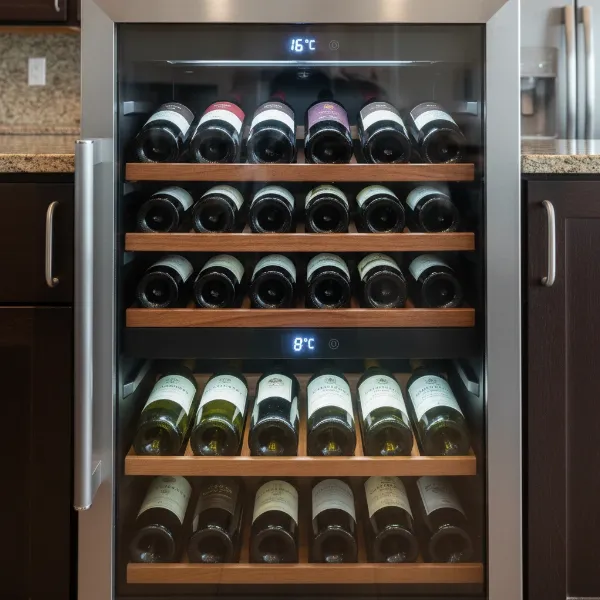 Neatly organized wine bottles inside a dual zone wine refrigerator, with reds in one section and whites in another, showing good storage practices
Organizing Your Collection
Zone Allocation: Store your red wines in the warmer zone and white or sparkling wines in the cooler zone. This seems intuitive but is the core benefit of a dual zone unit.
Accessibility: Place frequently accessed bottles closer to the front or in easily reachable sections. For long-term aging, less frequently accessed bottles can be stored towards the back or in less prominent areas.
Horizontal Storage: Always store wine bottles horizontally. This ensures the wine remains in contact with the cork, preventing it from drying out, shrinking, and allowing unwanted oxygen into the bottle.
Maintenance Tips
Regular Cleaning: Periodically clean the interior with a mild, unscented cleaner to prevent mold, mildew, and odors that could taint your wine. Don’t forget to clean the condenser coils at the back or bottom of the unit (refer to your manual) to maintain efficiency.
Monitor Temperatures: Regularly check the digital temperature displays to ensure both zones are maintaining their set temperatures accurately.
Avoid Overloading: Stick to the manufacturer’s recommended capacity. Overloading can restrict airflow, making it harder for the refrigerator to maintain consistent temperatures and potentially overworking the compressor.
Replace Filters: If your unit has a carbon filter for odor absorption, replace it according to the manufacturer’s guidelines, typically every 6-12 months.
“A well-maintained dual zone wine refrigerator is more than an appliance; it’s a sanctuary for your collection, ensuring every sip is as intended by the winemaker.” – Admin, reviewgk.com Refrigerator Technician
Conclusion
Embracing the world of dual zone wine refrigerators is a definitive step toward elevating your wine experience. By providing two distinct, precisely controlled environments within a single unit, these appliances eliminate the compromise often associated with storing diverse wine collections. Whether you’re a connoisseur with an expanding cellar or an entertainer who appreciates perfectly chilled reds and crisp whites, the ability to store both at their optimal temperatures is invaluable for preserving flavor, promoting graceful aging, and ensuring every bottle is ready to pour.
When choosing your ideal unit, prioritize key features such as precise temperature control, ample capacity with quality shelving, UV protection, and robust vibration dampening. Consider your space, budget, and how frequently you intend to access your collection. With the right dual zone wine refrigerator, coupled with proper placement, organization, and maintenance, you can transform your home into a personalized wine haven. It’s an investment that pays dividends in every perfectly preserved pour.
What exquisite red or vibrant white will you chill first in your new wine refrigerator?
Frequently Asked Questions
What is the ideal temperature range for red and white wines in a dual zone refrigerator?
Red wines are best stored around 55-65°F (13-18°C), while white and sparkling wines thrive at cooler temperatures, typically 40-55°F (5-13°C). Dual zone refrigerators allow these distinct ranges within one unit for optimal preservation and serving.
Can I store other beverages like beer or soda in a wine refrigerator?
While primarily designed for wine, some dual zone units with adjustable shelves can accommodate other beverages like beer or soda. However, always check the temperature ranges; perishable foods require colder temperatures (below 40°F) than what is typically ideal for wine storage.
What’s the difference between a freestanding and a built-in wine refrigerator?
Freestanding models offer flexibility as they can be placed anywhere with proper ventilation. Built-in units are designed to integrate seamlessly into existing cabinetry for a flush, custom look, often requiring specific dimensions and professional installation.
How important is humidity control in a wine refrigerator?
Humidity control is crucial, especially for long-term storage, as it prevents corks from drying out. A dry cork can shrink, allowing air to penetrate the bottle and causing oxidation, which can spoil the wine. Optimal humidity levels typically range from 50-70%.
How many bottles should my wine refrigerator hold?
The ideal capacity depends on your current wine collection size and how much you anticipate it will grow. Capacities vary widely, from compact 18-bottle units for casual collectors to large cellars holding over 100 bottles. Choose a size that balances your needs with your available space.