Choosing a new refrigerator is a significant decision for any household, shaping daily routines and kitchen aesthetics. Beyond brand and capacity, the fundamental layout—specifically, where the freezer is placed—plays a crucial role in convenience, efficiency, and overall satisfaction. Are you constantly reaching for frozen items, or does fresh produce dominate your culinary life? The answer to this question, alongside your budget and design preferences, will guide you toward the ideal refrigeration solution. This comprehensive guide will break down the advantages and disadvantages of both top freezer and bottom freezer refrigerators, helping you make an informed choice for your home.
Understanding Top Freezer Refrigerators
The top freezer refrigerator is the classic workhorse of countless kitchens, a design that has stood the test of time. In this configuration, the freezer compartment is positioned above the main fresh food section. This traditional layout is often celebrated for its straightforward functionality and cost-effectiveness.
Pros of Top Freezer Refrigerators:
- Affordability: Top freezer models are generally the least expensive refrigerator style on the market, making them an excellent choice for budget-conscious buyers or as a secondary appliance.
- Energy Efficiency: Historically, top freezers have been more energy-efficient than their bottom-freezer counterparts. This is partly due to the freezer’s location away from the compressor, which generates heat. Modern Energy Star-rated models in both categories are improving, but top freezers often still have a slight edge in energy savings.
- Eye-Level Freezer Access: For those who frequently access frozen foods like ice cream, frozen vegetables, or meal prep items, having the freezer at eye level offers unparalleled convenience, eliminating the need to bend down.
- Compact Design: These refrigerators typically feature a narrower width and more compact design, making them suitable for smaller kitchens or apartments where space is a premium.
- Simpler Maintenance: With fewer complex features and a more basic design, top freezer refrigerators often mean less to go wrong and easier, more affordable repairs.
Cons of Top Freezer Refrigerators:
- Frequent Bending for Fresh Food: The most significant drawback is the necessity to bend or stoop repeatedly to access fresh food items, which are typically used more often. This can be a considerable inconvenience for individuals with back pain or mobility issues.
- Limited Refrigerator Storage: Compared to bottom freezer models, the fresh food compartment might offer less overall storage space, particularly for taller or bulkier items.
- Basic Organization: While they offer wide shelves, the freezer section in top freezer models often has a simpler, less organized layout, making it challenging to keep items tidy or find smaller packages. They rarely feature pull-out drawers or advanced compartments.
- Traditional Aesthetic: Top freezers often have a more traditional, utilitarian appearance that might not align with modern kitchen designs aiming for a sleek, contemporary look.
- Fewer Advanced Features: These models typically come with fewer bells and whistles, such as exterior ice and water dispensers or specialized temperature-controlled drawers.
Exploring Bottom Freezer Refrigerators
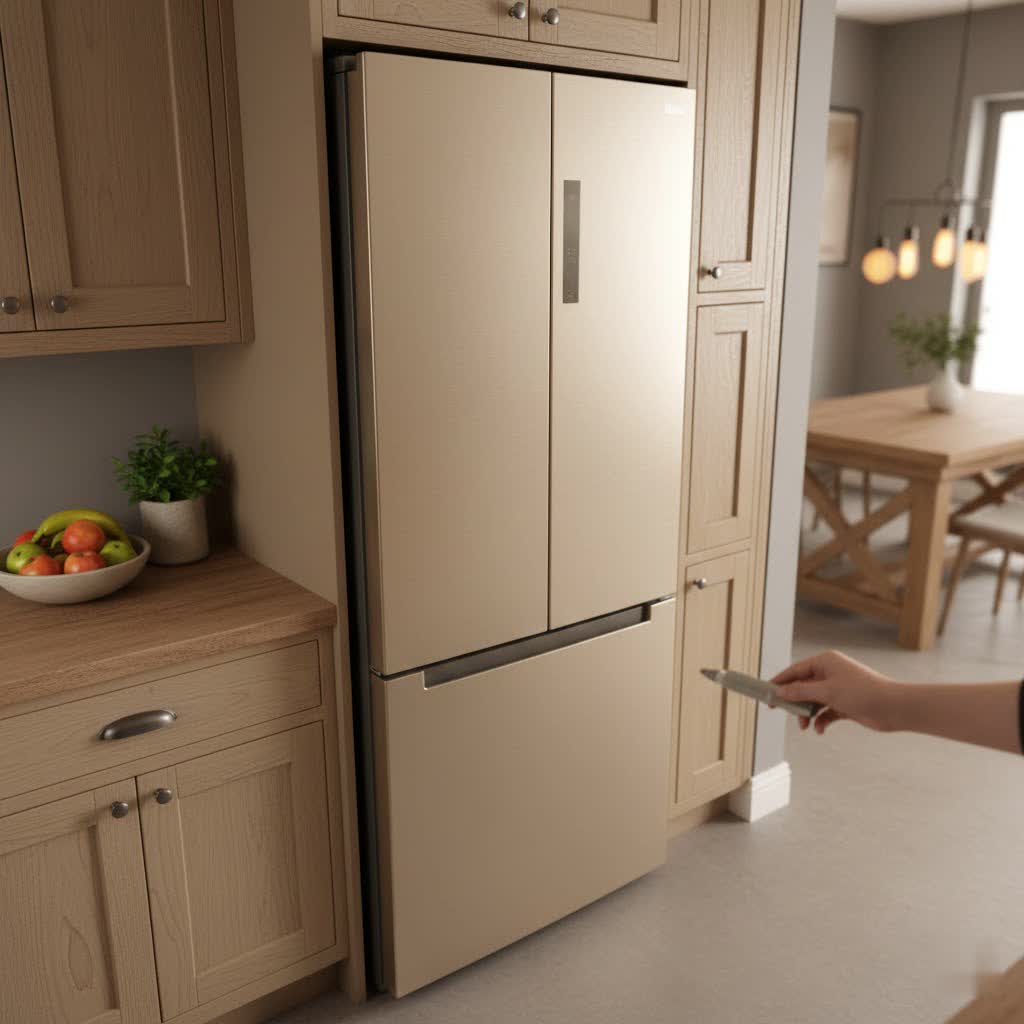
Gaining immense popularity in recent decades, bottom freezer refrigerators flip the traditional layout, placing the fresh food compartment at eye level and the freezer below. This design prioritizes easy access to everyday items and often incorporates modern features.
Pros of Bottom Freezer Refrigerators:
- Eye-Level Refrigerator Access: This is the primary advantage, offering easy visibility and access to fresh produce, dairy, and leftovers without bending. This ergonomic design is highly beneficial for daily use and for individuals with limited mobility.
- Enhanced Freezer Organization: Bottom freezers frequently come with spacious pull-out drawers, baskets, and dividers, allowing for much better organization of frozen goods. This design makes it easier to categorize and store bulky items like large cuts of meat or frozen pizzas.
- Modern Aesthetic: Bottom freezer refrigerators tend to boast a more contemporary and sleek design, seamlessly integrating into modern kitchen décors. Many models are available with French doors, further enhancing their stylish appeal.
- More Fresh Food Storage: These models often provide more generous and flexible storage space in the fresh food section, with adjustable shelves, humidity-controlled crisper bins, and specialized compartments.
- Advanced Features: Bottom freezers are more likely to include premium features such as external ice and water dispensers, multi-zone temperature control, and smart connectivity.
Cons of Bottom Freezer Refrigerators:
- Higher Upfront Cost: Bottom freezer refrigerators are typically more expensive than top freezer models due to their design, features, and often larger capacities.
- Bending for Frozen Food: While fresh food is at eye level, accessing frozen items requires bending down, which can be inconvenient for those who frequently use the freezer or have mobility challenges. Heavy frozen items can also be harder to lift from a lower drawer.
- Potential for Items to Get Lost: Despite pull-out drawers, smaller frozen items can sometimes get buried at the bottom if not organized meticulously.
- Energy Consumption: Historically, bottom freezer models have used slightly more energy than top freezers, though advancements and Energy Star ratings have narrowed this gap significantly in newer models.
- Safety for Children: The lower freezer can be easily accessible to young children, potentially posing a safety concern if heavy items are stored there.
Detailed Comparison: Top Freezer vs. Bottom Freezer
To help you navigate your decision, let’s look at a head-to-head comparison of key attributes:
| Feature | Top Freezer Refrigerator | Bottom Freezer Refrigerator |
|---|---|---|
| Upfront Cost | Lower, budget-friendly | Higher, premium investment |
| Energy Efficiency | Generally higher (can be 10-25% more efficient) | Slightly lower, but modern models are improving |
| Fresh Food Access | Requires bending | Eye-level, ergonomic |
| Frozen Food Access | Eye-level, easy | Requires bending/stooping into a drawer |
| Refrigerator Storage | Good, wide shelves, but less overall capacity | More spacious, flexible, and better organized |
| Freezer Organization | Simpler, often a single compartment | Excellent, with pull-out drawers and dividers |
| Aesthetics | Traditional, classic look | Modern, sleek, often available with French doors |
| Available Features | Basic; rarely includes external water/ice dispensers | More advanced; often includes external water/ice, smart tech |
| Suitability for Small Spaces | Very good, compact footprint | Good, but often larger capacities |
| Ergonomics for Mobility | Good for upper body/frozen items; poor for lower body/fresh items | Good for upper body/fresh items; poor for lower body/frozen items |
Who Needs Which Refrigerator? Your Comprehensive Buying Guide
Choosing the “best” refrigerator isn’t about one being inherently superior, but about finding the perfect match for your lifestyle. Consider these factors:
- Determine Your Budget: If cost is a primary concern, a top freezer model will almost always be the more economical choice upfront and potentially in ongoing energy costs. For those willing to invest more for convenience and modern features, a bottom freezer is a strong contender.
- Evaluate Your Usage Habits:
- Frequent Fresh Food User? If you cook with fresh ingredients daily and access the main compartment multiple times a day, a bottom freezer will offer superior ergonomics and comfort.
- Frequent Frozen Food User? If you often grab items from the freezer for quick meals, a top freezer keeps these items conveniently at eye level.
- Assess Mobility and Physical Needs: For individuals with back issues, knee problems, or other mobility challenges, a bottom freezer is generally preferred because it minimizes bending for the most frequently accessed fresh food items.
- Match Your Kitchen Aesthetics: If your kitchen boasts a classic or traditional design, a top freezer can blend in perfectly. For a contemporary, minimalist, or high-tech kitchen, a bottom freezer (especially a French door model) offers a more integrated and stylish look.
- Factor in Available Space: Top freezer refrigerators tend to be narrower, making them a practical choice for galley kitchens or smaller living spaces. While bottom freezers come in various sizes, they generally occupy a larger footprint due to their design.
- Look for Specific Features: If external ice and water dispensers, precise temperature zones, or smart home connectivity are non-negotiable, you’ll find these more readily available in bottom freezer models. If you prioritize simplicity and core cooling functions, a top freezer is sufficient.
Maintaining Your Refrigerator for Longevity
Regardless of the style you choose, proper maintenance is key to extending your refrigerator’s lifespan and ensuring efficient operation.
- Regular Cleaning: At least once a month, wipe down interior shelves and drawers. A deeper clean every few months, involving emptying the fridge, removing shelves, and cleaning with a mild detergent solution, will prevent odors and maintain hygiene. Don’t forget to clean the condenser coils annually to ensure optimal energy efficiency.
- Smart Food Organization: Arrange your food logically. Keep frequently used items at the front, group similar items, and use clear containers to maximize visibility. This reduces door-opening time and wasted energy. For bottom freezers, utilize the drawer dividers to prevent items from getting lost.
- Adjust Temperature Settings: Maintain your refrigerator at 37°F (3°C) and your freezer at 0°F (-18°C) for optimal food preservation and energy efficiency. Avoid overcrowding, as this can impede airflow and make the appliance work harder.
- Address Common Issues Promptly: Don’t ignore unusual noises, excessive frost buildup, or inadequate cooling. Simple troubleshooting, like checking door seals or defrosting manually, can prevent minor issues from becoming costly repairs.
Conclusion
The debate between a top freezer and a bottom freezer refrigerator ultimately boils down to a personal decision, reflecting your unique priorities and daily habits. Top freezers offer an economical, energy-efficient, and time-tested solution, ideal for those who frequently use frozen goods and appreciate simplicity. In contrast, bottom freezers provide superior ergonomics for fresh food access, enhanced organization, and a modern aesthetic, appealing to those who prioritize convenience and design.
By carefully considering your budget, how you use your fridge and freezer, your physical comfort, and your kitchen’s style, you can confidently select the refrigerator layout that will bring the most comfort and efficiency to your home. Which refrigerator style will become the cornerstone of your kitchen’s efficiency and aesthetic appeal?
Frequently Asked Questions
Are top freezer refrigerators more energy-efficient?
Table is empty.Yes, top freezer models generally consume less energy, primarily because the freezer compartment is further from the heat-generating compressor. This can lead to lower electricity bills, though many modern bottom freezer units are designed with energy efficiency in mind and carry Energy Star certifications.
Which refrigerator layout is better for someone with back pain?
A bottom freezer refrigerator is generally better for individuals with back pain. It places the most frequently accessed fresh food items at eye level, minimizing the need to bend down repeatedly throughout the day.
Do bottom freezer refrigerators offer more storage space?
Bottom freezer refrigerators often provide more and better-organized storage space, particularly in the fresh food section, and typically feature pull-out drawers in the freezer that enhance usability and capacity compared to the simpler shelves of top freezers.
What is the average lifespan of a top freezer vs. bottom freezer refrigerator?
Both top and bottom freezer refrigerators typically have a similar lifespan, ranging from 10 to 15 years with proper care and maintenance. The longevity largely depends on the brand, model quality, and how well the appliance is maintained.
Are top freezer refrigerators still relevant in modern kitchens?
Absolutely. While bottom freezers offer a more contemporary look, top freezer refrigerators remain highly relevant due to their reliability, cost-effectiveness, and compact design. They are particularly practical for smaller kitchens, secondary units, or for those who prefer a classic aesthetic.