Choosing the right refrigerator is more than just picking an appliance; it’s a decision that shapes your kitchen’s aesthetics, functionality, and even your daily routine. In the world of refrigeration, two primary types stand out: freestanding and built-in. While both serve the essential purpose of keeping your food fresh, they offer distinct experiences in design, performance, and investment. Understanding these differences is crucial to making an informed choice that perfectly aligns with your home, lifestyle, and budget. Let’s delve into the nuances of each to help you discover which refrigerator truly belongs in your kitchen.
Understanding Freestanding Refrigerators
Freestanding refrigerators are the most common and versatile choice for many households. They are designed to stand independently, finished on all sides, allowing them to be placed almost anywhere in your kitchen where there’s an electrical outlet and a water hookup. These units are not integrated into your cabinetry but rather slide into an open space, often protruding a few inches beyond the standard counter depth.
Advantages of Freestanding Refrigerators
- Affordability: Freestanding models are generally more budget-friendly, with a wide range of price points to suit various financial plans. Their lower upfront cost makes them an accessible option for many.
- Ease of Installation: Installation is typically straightforward—simply roll the unit into place and plug it in. Professional installation is rarely required, which further reduces costs and simplifies setup.
- Greater Capacity & Depth: Many freestanding refrigerators, especially full-depth models, offer more interior storage space. Their deeper design is ideal for families who frequently buy in bulk or need to store large platters and oddly shaped items.
- Flexibility and Mobility: These units can be easily moved, repositioned, or replaced, making them suitable for renters or those who anticipate changes to their kitchen layout. They offer significant flexibility if you decide to upgrade or relocate.
- Wide Variety of Styles: Freestanding refrigerators come in an extensive array of sizes, configurations (top-freezer, bottom-freezer, side-by-side, French door), and finishes, providing ample options to match diverse kitchen aesthetics.
|
Our Picks for the Best Refrigerator in 2026
As an Amazon Associate I earn from qualifying purchases.
|
||
| Num | Product | Action |
|---|---|---|
| 1 | Frigidaire EFR786 Retro Apartment Size Refrigerator with Top Freezer - 2 Door Fridge with 7.5 Cu Ft of Storage Capacity, Adjustable Spill-Proof Shelves, Door & Crisper Bins, Black |

|
| 2 | Electactic Mini Fridge 130 Can Beverage Refrigerator Cooler, 3.2 Cu.Ft Drink Fridge for Soda Wine Beer, Adjustable Temperature Control for Home Office, Black |
|
| 3 | ARCTIC CHEF Mini Refrigerator, Compact Freezer Compartment, Adjustable Thermostat Control, Reversible Door, Ideal Fridge for Dorm, Office, Apartment, Platinum Stainless, 3.2 Cubic Feet |
|
| 4 | Frigidaire, 2 Door Apartment Size Refrigerator/Freezer Combo, 7.5 cu ft, Platinum Series, Stainless, 23" D x 21.5" W x 55.5" H |
|
| 5 | GE Profile 28.7 cu. ft. 4-Door French Door Refrigerator in Stainless Steel with Dual-Dispense Autofill Pitcher PGE29BYTFS |
|
| 6 | GE GTS18HGNRWW 28 Inch Top Freezer Refrigerator with 17.5 Cu. Ft. Capacity, Reversible Hinges, Gallon Door Shelves, Adjustable Glass Shelves, Frost Free |
|
| 7 | Frigidaire, 2 Door Apartment Size Refrigerator with Freezer, 7.5 cu ft, Adjustable Spill-Proof Shelves, Crisper Bins, Platinum Silver, Garage Ready |
|
| 8 | Samsung 17.5 cu. ft. Smart Counter Depth 3-Door French Door Refrigerator, Stainless Steel, RF18A5101SR/AA |
|
| 9 | NEWBULIG Mini Fridge with Freezer 3.2 Cu.Ft Small Refrigerator for Office, Dorm, Small Fridge with Adjustable Thermostat, Energy Saving, Singel Door, Black |
|
| 10 | Whirlpool WRS321SDHZ 21 Cu. Ft. Stainless Side-by-Side Refrigerator |
|
Disadvantages of Freestanding Refrigerators
- Less Integrated Aesthetic: Since they are not flush with cabinetry, freestanding refrigerators often protrude into the kitchen space, potentially disrupting a seamless design flow. They may not achieve the sleek, customized look desired in high-end kitchens.
- Standardized Appearance: While available in many finishes, freestanding models offer less customization in terms of panel-ready options, meaning they typically cannot blend completely with your existing cabinetry.
- Space Requirements: They need sufficient clearance for airflow around the unit and for the doors to swing open freely, which might require more floor space than anticipated.
Understanding Built-In Refrigerators
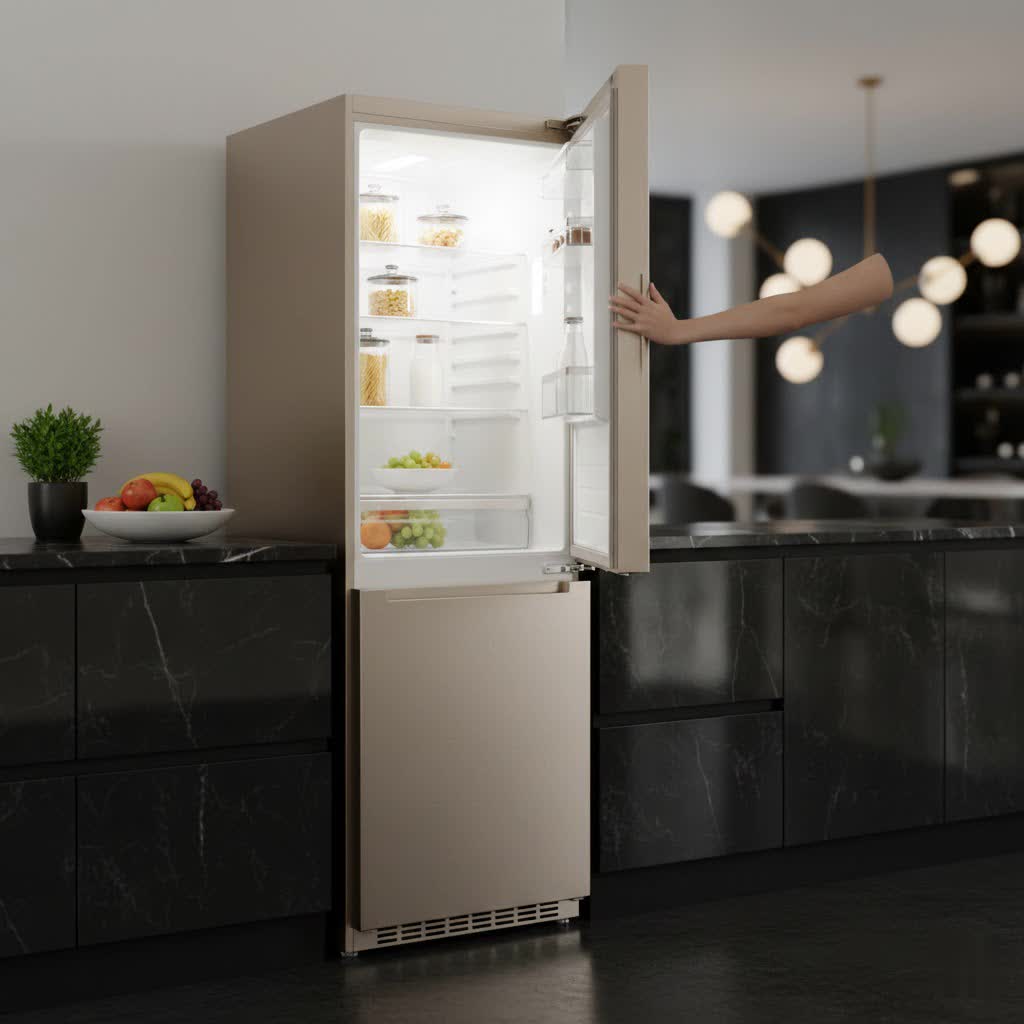
Built-in refrigerators are the epitome of integrated kitchen design, crafted to blend seamlessly with your cabinetry for a polished, high-end appearance. These units are typically shallower than freestanding models, designed to sit flush with your counters and cabinets, creating a streamlined look. Many built-in refrigerators are “panel-ready,” allowing you to attach custom panels that match your kitchen’s existing cabinetry, making the appliance virtually disappear.
Advantages of Built-In Refrigerators
- Seamless Aesthetic Integration: The primary appeal of built-in refrigerators is their ability to create a truly custom and luxurious kitchen design. They integrate flawlessly with surrounding cabinetry, offering clean lines and a sophisticated, cohesive look.
- Customization Options: With panel-ready fronts, you can achieve a truly personalized kitchen where your refrigerator is indistinguishable from your cabinets. Stainless steel finishes are also available for a more modern, yet still integrated, feel.
- Enhanced Home Value: A well-designed kitchen featuring built-in appliances can significantly increase your home’s appeal and resale value, acting as a major selling point for prospective buyers.
- Advanced Features and Durability: Built-in models often come with premium features, advanced cooling systems for precise temperature management, and are constructed with high-quality materials designed for a longer lifespan, typically 15-20 years.
- Optimal Organization: While shallower, many built-in models compensate with greater height and width (up to 48 inches), optimizing interior design for efficient storage and accessibility.
Disadvantages of Built-In Refrigerators
- Significantly Higher Cost: Built-in refrigerators represent a substantial investment, often costing 50% to three times more than their freestanding counterparts. This higher price includes the unit itself, premium materials, and specialized installation.
- Complex and Costly Installation: Professional installation is almost always required due to precise measurements, cabinetry modifications, and the need to ensure proper ventilation. This adds to the overall expense and complexity of the process.
- Shallower Depth and Potentially Less Usable Capacity: To achieve their flush aesthetic, built-in units are typically shallower (around 24 inches deep). While they might be taller and wider, this can sometimes translate to less usable interior space for bulky items or large food containers compared to a full-depth freestanding fridge.
- Limited Flexibility: Once installed, built-in refrigerators are permanent fixtures. They are challenging and costly to move or replace, requiring careful planning for any future kitchen renovations.
Key Differences at a Glance
To simplify your decision, here’s a direct comparison of the main distinctions between freestanding and built-in refrigerators:
| Category | Freestanding Refrigerators | Built-In Refrigerators |
|---|---|---|
| Aesthetics | Standalone, visible appliance, may protrude | Seamless, flush with cabinetry, often panel-ready |
| Depth | Typically full-depth (up to 36 inches) | Cabinet-depth (around 24 inches) |
| Internal Capacity | Generally more depth for bulky items | Shallower depth, compensated by height/width; may feel less for large items |
| Cost | More affordable, wide price range | Significantly higher initial cost |
| Installation | Easy, DIY-friendly, plug-and-play | Complex, requires professional installation and cabinet modification |
| Flexibility | Easily moved, replaced, or relocated | Fixed in place, difficult to move or replace |
| Lifespan | Average 10-15 years | Average 15-20 years (due to premium construction) |
| Customization | Limited to factory finishes | High, with panel-ready options to match cabinetry |
| Resale Value | Standard contribution to home value | Can significantly enhance home value |
Choosing the Right Refrigerator for Your Kitchen
Making the right choice between a freestanding and built-in refrigerator depends heavily on your individual priorities and kitchen aspirations.
- Consider Your Budget: If cost is a primary concern, a freestanding refrigerator will offer a wider selection of affordable options. Built-in units come with a premium price tag, not just for the appliance but also for installation and potential cabinetry work.
- Assess Your Kitchen Design Goals: For a modern, minimalist, or luxurious kitchen that prioritizes a seamless aesthetic, a built-in refrigerator is the clear choice. If you prefer a more traditional look or are comfortable with your appliance making its own statement, a freestanding unit fits perfectly.
- Evaluate Space and Capacity Needs: Families requiring maximum internal depth for large grocery hauls might lean towards a full-depth freestanding model. However, if you prefer a sleek, shallower profile and can utilize vertical or horizontal space effectively, a wider built-in might work.
- Think About Installation and Future Flexibility: If you anticipate moving frequently, prefer simple installation, or desire the flexibility to rearrange your kitchen, a freestanding refrigerator is more practical. A built-in unit is a long-term commitment that integrates into your home’s architecture.
- Prioritize Features and Energy Efficiency: Both types offer excellent performance, but built-in models often come with advanced features as standard. For energy efficiency, look for Energy Star-certified models in both categories, as performance can vary widely by specific model and manufacturer.
“When investing in a refrigerator, especially a built-in model, you’re not just buying an appliance; you’re investing in your kitchen’s long-term functionality and aesthetic. The durability and advanced engineering of premium built-ins often translate to a longer service life, making them a wise choice for homeowners planning to stay put for years.”
Conclusion
The debate between freestanding and built-in refrigerators boils down to a balance of aesthetics, cost, flexibility, and performance. Freestanding refrigerators offer affordability, ease of installation, and generous storage depth, making them a practical and versatile choice for many households. On the other hand, built-in refrigerators provide an unparalleled seamless aesthetic, custom integration, and premium features, ideal for those seeking a high-end, cohesive kitchen design and willing to invest more.
Ultimately, the best refrigerator for you will harmoniously blend with your kitchen’s design, meet your storage demands, and fit within your financial plan. By carefully weighing these differences, you can confidently select the refrigeration solution that enhances both your culinary experience and your home’s overall appeal. What vision do you have for your dream kitchen, and which refrigerator best brings it to life?
Frequently Asked Questions
Are built-in refrigerators worth the extra cost?
Built-in refrigerators are a significant investment, but many homeowners find them worth it for the superior aesthetic integration, custom look, advanced features, and potential increase in home resale value. If a seamless, high-end kitchen design is a priority, the cost can be justified.
Can a freestanding refrigerator be made to look built-in?
While a freestanding refrigerator cannot truly be “built-in” to sit flush with cabinetry without significant modifications, counter-depth freestanding models can offer a partially integrated look by protruding less than standard-depth units. Custom cabinetry surrounds can also help create a more recessed appearance.
Do built-in refrigerators offer more storage?
Built-in refrigerators are typically shallower to align with cabinet depth, which can mean less overall internal cubic footage compared to a full-depth freestanding model of similar width. However, they often compensate with greater height and width, allowing for efficient organization despite the shallower profile.
How long do built-in refrigerators last compared to freestanding?
Due to their premium construction, higher-quality components, and often more robust cooling systems, built-in refrigerators generally have a longer lifespan, typically lasting 15 to 20 years. Freestanding models usually have an average lifespan of 10 to 15 years.