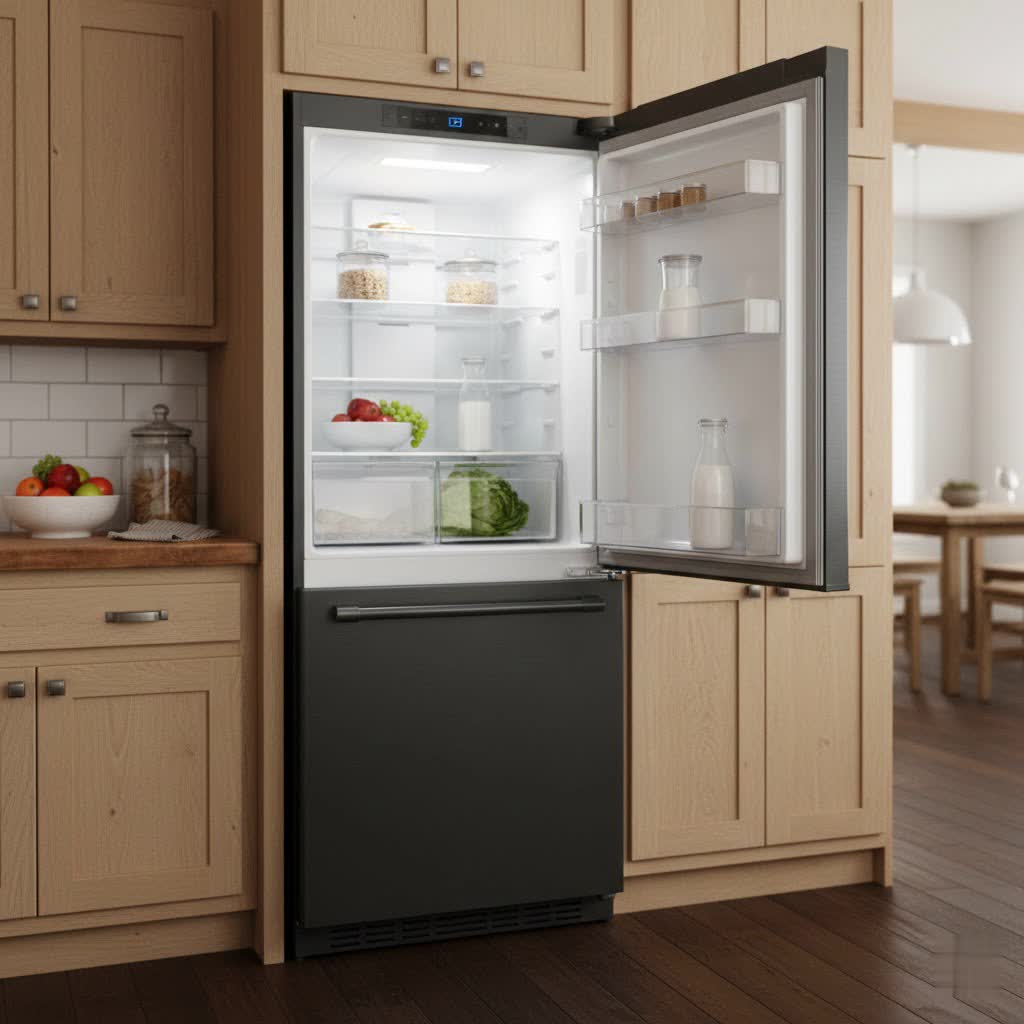
Few things are as disruptive in a peaceful home as the incessant hum or sudden clatter of a noisy refrigerator. As a central appliance, its operational sounds can permeate living spaces, impacting comfort and tranquility. For homeowners seeking a quieter kitchen, understanding the technology behind refrigerator compressors is crucial. The choice often comes down to two primary types: the traditional standard (fixed-speed) compressor and the more modern inverter (variable-speed) compressor. This article will delve into how each operates, directly compare their noise profiles, and provide comprehensive insights to help you make an informed decision for a more serene home environment.
Understanding Refrigerator Compressors
At the heart of every refrigerator lies the compressor, an essential component responsible for circulating refrigerant to cool the appliance’s interior. It acts as the “engine” of the cooling system, compressing the refrigerant gas and moving it through coils, allowing heat to be absorbed from inside the refrigerator and expelled outside. The fundamental difference between standard and inverter refrigerators lies in how their compressors manage this crucial task—a distinction that significantly impacts both energy consumption and, critically, noise levels.
The Standard Compressor: A Loud & Clear Story
Traditional refrigerators typically employ a standard, or fixed-speed, compressor. This type operates on a straightforward “all on” or “all off” principle. When the internal temperature of the refrigerator rises above a set point, the compressor kicks in at full power to rapidly cool the compartment. Once the desired temperature is reached, it shuts off completely. This stop-and-start cycle repeats multiple times throughout the day, dictated by the cooling demand.
The inherent design of standard compressors contributes to a more noticeable noise profile. Each time the compressor ignites, there’s a distinct “click” followed by a steady, often loud, hum as it runs at maximum capacity. These sudden jolts of activity and the consistent high-speed operation generate significant vibration and mechanical stress, translating into audible disruptions. For many, these characteristic sounds—the abrupt cycling on and off—can be quite disturbing, especially in open-concept living areas or during quiet hours at night.
The Inverter Compressor: Engineered for Silence
In contrast, inverter compressors represent a significant advancement in refrigeration technology, specifically engineered for efficiency and quiet operation. Unlike their fixed-speed counterparts, inverter compressors feature variable-speed technology. This means they don’t just switch between “on” and “off”; instead, they continuously adjust their operating speed based on the precise cooling demand of the refrigerator.
This continuous, adaptive operation is the key to their quieter performance. Rather than starting abruptly at full power, an inverter compressor gradually ramps up or down, maintaining a more consistent and controlled speed. This eliminates the sudden mechanical jolts and vibrations associated with fixed-speed models. The result is a refrigerator that operates with a gentle, consistent hum that is often barely noticeable, blending seamlessly into the background noise of a home. For households valuing peace and quiet, particularly in kitchens integrated with living spaces, the subtle operation of an inverter compressor is a distinct advantage.
Inverter vs. Standard: The Noise Verdict (and Decibels)
When directly comparing the two, inverter compressors unequivocally offer a quieter experience in refrigerators. This superior noise performance stems from their ability to run continuously at varying speeds, avoiding the jarring on/off cycles that characterize standard compressors. The smooth, consistent operation of an inverter motor reduces mechanical strain and minimizes the sharp sounds and vibrations typical of older models.
In terms of quantifiable noise, standard refrigerators often operate within a range of 32 to 47 decibels (dB), with noticeable peaks during their frequent startup and shutdown phases. Conversely, many modern inverter refrigerators are designed to operate at significantly lower decibel levels, often below 40 dB, with some achieving ultra-low sound power levels even below 30 dBA. While the specific “loudness” can vary by model and manufacturer, the average noise produced by an inverter compressor over time is consistently less disruptive. It is important to note that while the compressor is a major source of noise, other components like fans can also contribute to the overall sound level of any refrigerator.
Beyond Quietness: A Holistic Comparison
While noise is a primary concern for many, the choice between inverter and standard compressors has broader implications for a refrigerator’s performance and ownership experience.
Inverter Compressor Refrigerators
- Pros:
- Whisper-Quiet Operation: The most significant advantage, ideal for open-plan living and sensitive ears.
- Energy Efficiency: By only using the power needed, inverter compressors consume significantly less electricity, leading to lower utility bills.
- Superior Temperature Stability: Continuous operation ensures more consistent internal temperatures, preserving food freshness for longer periods.
- Extended Lifespan: Reduced wear and tear from smooth, variable operation can lead to a longer appliance life.
- Less Vibration: Contributes to quieter running and less stress on internal components.
- Cons:
- Higher Initial Cost: Inverter refrigerators typically come with a higher upfront price tag due to their advanced technology.
- More Complex Repairs: Should an issue arise, the sophisticated electronics may require specialized technicians and potentially more expensive parts.
|
Our Picks for the Best Refrigerator in 2026
As an Amazon Associate I earn from qualifying purchases.
|
||
| Num | Product | Action |
|---|---|---|
| 1 | NEWBULIG Mini Fridge with Freezer 3.2 Cu.Ft Small Refrigerator for Office, Dorm, Small Fridge with Adjustable Thermostat, Energy Saving, Singel Door, Black |

|
| 2 | Frigidaire, 2 Door Apartment Size Refrigerator with Freezer, 7.5 cu ft, Adjustable Spill-Proof Shelves, Crisper Bins, Platinum Silver, Garage Ready |
|
| 3 | Frigidaire, 2 Door Apartment Size Refrigerator/Freezer Combo, 7.5 cu ft, Platinum Series, Stainless, 23" D x 21.5" W x 55.5" H |
|
| 4 | Whirlpool WRS321SDHZ 21 Cu. Ft. Stainless Side-by-Side Refrigerator |
|
| 5 | Samsung 17.5 cu. ft. Smart Counter Depth 3-Door French Door Refrigerator, Stainless Steel, RF18A5101SR/AA |
|
| 6 | GE GTS18HGNRWW 28 Inch Top Freezer Refrigerator with 17.5 Cu. Ft. Capacity, Reversible Hinges, Gallon Door Shelves, Adjustable Glass Shelves, Frost Free |
|
| 7 | Frigidaire EFR786 Retro Apartment Size Refrigerator with Top Freezer - 2 Door Fridge with 7.5 Cu Ft of Storage Capacity, Adjustable Spill-Proof Shelves, Door & Crisper Bins, Black |
|
| 8 | ARCTIC CHEF Mini Refrigerator, Compact Freezer Compartment, Adjustable Thermostat Control, Reversible Door, Ideal Fridge for Dorm, Office, Apartment, Platinum Stainless, 3.2 Cubic Feet |
|
| 9 | Electactic Mini Fridge 130 Can Beverage Refrigerator Cooler, 3.2 Cu.Ft Drink Fridge for Soda Wine Beer, Adjustable Temperature Control for Home Office, Black |
|
| 10 | GE Profile 28.7 cu. ft. 4-Door French Door Refrigerator in Stainless Steel with Dual-Dispense Autofill Pitcher PGE29BYTFS |
|
Standard Compressor Refrigerators
- Pros:
- Lower Initial Cost: Generally more affordable to purchase, making them attractive for budget-conscious buyers.
- Simpler Technology: Repairs can sometimes be less complex and costly due to fewer specialized components.
- Cons:
- Noticeable Noise: Frequent on/off cycles result in louder, more disruptive operation.
- Less Energy Efficient: The constant cycling at full power consumes more electricity.
- Temperature Fluctuations: Less precise temperature control can sometimes affect food preservation.
- Shorter Lifespan: Increased mechanical stress from repeated starts and stops can shorten the compressor’s lifespan.
Choosing Your Quiet Companion: A Buying Guide
When selecting a refrigerator, consider your priorities. If a serene home environment is paramount, especially in spaces where kitchen noise can easily travel, an inverter refrigerator is a worthwhile investment. Evaluate your budget, but also factor in the long-term savings from energy efficiency and potential longevity. Look for the decibel (dB) rating on product specifications or energy labels; models with lower numbers (ideally below 40 dB) indicate quieter operation. While standard compressors remain a viable, budget-friendly option for secondary fridges or less noise-sensitive areas, the comfort and benefits of inverter technology often outweigh the initial higher cost for primary household use.
Maximizing Refrigerator Quietness (Regardless of Compressor Type)
Even with the quietest compressor, external factors can influence a refrigerator’s noise levels. Here are some tips to ensure your appliance operates as quietly as possible:
- Proper Installation and Leveling: Ensure your refrigerator is perfectly level and has adequate clearance from walls and cabinets for proper airflow. Uneven placement or insufficient space can lead to vibrations and amplified noise.
- Regular Cleaning: Dust and debris can accumulate on condenser coils, making the compressor work harder and potentially louder. Clean the coils periodically.
- Check the Fan: A noisy fan, either for the condenser or evaporator, can contribute significantly to overall noise. Ensure it’s clean and unobstructed.
- Avoid Overfilling: An overloaded refrigerator forces the compressor to work harder, which can increase noise. Arrange food scientifically to allow for proper air circulation.
- Professional Maintenance: If unusual or excessive noise persists, consult a qualified technician to diagnose and address potential mechanical issues.
Conclusion
The debate between inverter and standard refrigerator compressors leans heavily in favor of inverter technology when quiet operation is a key consideration. Its variable-speed function ensures a consistently smooth and significantly less disruptive performance, transforming your kitchen into a more peaceful space. Beyond noise reduction, inverter refrigerators offer tangible benefits in energy efficiency, temperature stability, and extended appliance life. While they may require a higher initial investment, the long-term savings and enhanced home comfort often make them the smarter, quieter choice. What role does quietness play in your ideal kitchen environment?
Frequently Asked Questions
Are all inverter refrigerators completely silent?
No, while inverter refrigerators are significantly quieter than standard models, they are not completely silent. They produce a low, consistent hum as the compressor continuously adjusts its speed to maintain temperature, which is generally much less disruptive than the on/off cycling of a standard compressor.
How can I determine the noise level of a refrigerator before buying?
Most manufacturers provide a decibel (dB) rating for their refrigerators, often found in product specifications or on energy labels. Look for models with lower dB ratings, ideally below 40 dB, for a quieter operation.
Does a louder refrigerator always indicate a problem?
Not necessarily. While unusual loud noises like grinding, knocking, or high-pitched whines can signal a problem, some level of humming, buzzing, or clicking is normal for any refrigerator. However, if the noise changes significantly or becomes excessively loud (e.g., above 60 dB), it’s worth investigating.
Is the higher cost of an inverter refrigerator justified by its quietness?
For many, yes. The initial higher cost of an inverter refrigerator is often justified by its significantly quieter operation, greater energy efficiency, more stable temperature control for better food preservation, and potentially longer lifespan due to reduced wear and tear.
What is a good decibel level for a quiet refrigerator?
A refrigerator with a noise level between 35-40 dB is generally considered quiet. Anything below 35 dB is exceptionally quiet, while levels above 45 dB for a modern refrigerator might be noticeable, especially in a quiet home environment.